
📑 On this page
Most people know that good posture is important for physical health, but many don’t realize it also shapes your confidence and professional presence. The way you sit or stand influences your mood, self-esteem, and even how others perceive you at work. Psychological studies have shown that simply sitting upright or standing tall can make you feel more self-assured, whereas slouching tends to undermine confidence. In other words, your body language isn’t just about appearance – it directly affects your mindset.
In this article, we explore the psychology of standing and how standing desk posture benefits can boost your confidence at work. You’ll learn why standing with proper posture makes you feel more assertive, the health perks that translate into confidence, and how to build good habits with a standing desk. As Singapore’s exclusive distributor of Vival standing desks, Esmond Service Centre brings research-backed insights (and our own ergonomic expertise) to help you stand taller – both literally and figuratively – for greater success at work.
How Posture Shapes Confidence and Presence at Work
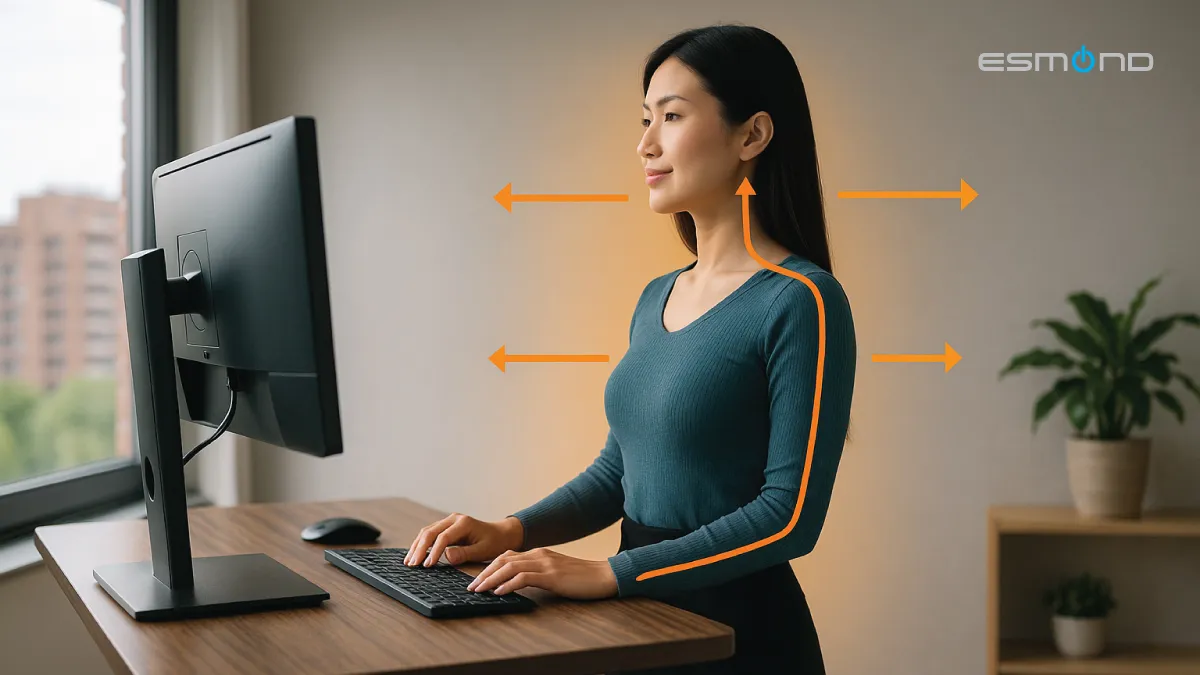
Your posture speaks volumes before you even say a word. In fact, much of our communication is nonverbal, and posture is a key part of that. Standing tall signals confidence – you appear engaged, capable, and in control. Conversely, slouching or hunching can make you seem unsure or disengaged. This is why someone with an upright stance often commands more respect in meetings or presentations.
Good posture doesn’t just influence others’ perceptions – it also changes how you feel. Researchers at Ohio State University (Briñol, Petty and Wagner, European Journal of Social Psychology, 2009) asked 71 students to list three positive or three negative traits about their own future job performance, while sitting either upright or slumped. The upright posture did not create confidence — it made people more confident in whatever they were already thinking, positive or negative. That is the finding worth acting on, and the researchers' own caveat comes with it: sitting up straight has psychological benefits "as long as you generally have positive thoughts" (Ohio State University). So posture is an amplifier, not a switch: fix what you are telling yourself first, then let your posture back it up. Over time this creates a positive feedback loop: standing in a confident pose boosts your self-esteem, which in turn encourages you to keep a strong posture. Experts note that standing tall and taking up more space can even “radiate more energy to others, which in turn can make you feel more confident”. All of this means improving your posture is a direct path to improving your presence and confidence at work – a core reason why standing desk posture benefits are so profound.
What Physical Standing Desk Posture Benefits Support Confidence?
One major advantage of using a standing desk is the host of physical benefits that in turn boost your confidence. By alleviating discomfort and keeping your body energized, you set a foundation for feeling more self-assured. Key standing desk posture benefits include:
- Reduced Pain and Tension: Alternating between sitting and standing can alleviate back, neck, and shoulder strain. A 2024 trial in Healthcare put 24 office workers who already had a forward head posture through a single 30-minute typing session, half of them standing. Neck alignment improved slightly in the standing group and got worse in the seated group, and neck and shoulder discomfort rose significantly only in the seated group — but typing speed and error rates were the same in both (study). Read it as a comfort finding measured over half an hour in people who already had a problem, not as a promise about your whole working day. With fewer aches and pains to distract you, you can focus better and feel more comfortable – which naturally helps you appear calm and confident.
- Improved Mood and Energy: Moving more during the day (thanks to standing breaks) boosts your circulation and energy levels. Research has noted lower fatigue and higher energy in people who use sit-stand routines, leading to better task completion. A brighter mood and extra energy make you more enthusiastic and confident in your work. Instead of the post-lunch slump, you’ll feel capable and in control – a clear benefit of standing desk posture habits.
- Better Breathing and Poise: Standing with good posture engages your core muscles and opens your chest for fuller breathing. Pulling your shoulders back and aligning your spine allows your lungs to expand more easily, helping to reduce stress and keep you relaxed. This physical openness sends a signal to your brain that you are strong and composed. By training your body to stay upright, a standing desk helps you naturally project confidence through both your stance and your calm, steady breathing.
Building Confidence - Boosting Habits with a Standing Desk
Simply owning a standing desk isn’t enough – it’s using it correctly and consistently that unlocks the real posture benefits. Here are a few habits to build that will maximize the confidence-boosting effects of your standing desk:
- Step 1 — alternate sitting and standing: Don’t try to stand all day. Instead, switch positions regularly to stay fresh. Experts suggest about a 1:1 or 2:1 ratio of sitting-to-standing time is optimal for comfort and energy. For example, sit for half an hour, then stand for the next fifteen to thirty minutes — that is the 2:1 to 1:1 balance in practice. Frequent position changes prevent fatigue and stiffness, helping you maintain good posture. By avoiding slouch-inducing fatigue, you’ll preserve the positive effects of your upright stance. Consistency is key – regular movement keeps you feeling energized and confident.
- Step 2 — adjust your desk ergonomics: Set up your standing desk to fit you. The desk height should be at about elbow level when you type (elbows roughly 90°) and your monitor’s top should be at eye level. This ergonomic alignment keeps your head, neck, and wrists in a neutral, strain-free position. Many quality desks (such as the Vival models) include memory preset buttons – use them to save your ideal sitting and standing heights. With one touch, you can shift positions without losing your ergonomic sweet spot. A properly adjusted desk makes it easy to maintain correct posture throughout the day, ensuring you reap all the standing desk posture benefits without distraction.
- Step 3 — take breaks and stretch: No posture is ideal if you hold it for too long. Make it a habit to move briefly every hour – stand up, stretch your arms and shoulders, or take a short walk. Regular micro-breaks prevent any one group of muscles from getting overtaxed. For instance, rolling your shoulders or doing a quick chest stretch at your desk can reset your posture and relieve tension. You can also set gentle reminders (an alarm or a note) to check in on your posture periodically. These small habits ensure that by the end of the day, you’re less stiff or sore. The result: you’ll finish work feeling alert and confident, instead of drained. Over time, your body will automatically adopt better posture, and you’ll truly internalize the standing desk posture benefits as second nature.
Posture and Professional Image
Beyond health, good posture is a cornerstone of a strong professional image. How you carry yourself at work directly affects how colleagues, clients, and managers perceive you. When you stand or sit with an upright, confident posture, you nonverbally communicate that you are competent, attentive, and ready to lead. On the other hand, a perpetually slouched posture might falsely signal disinterest or lack of confidence, even if that’s not your intent.
In corporate environments, this can have real implications for your career. Executive coaches often emphasize “executive presence,” which largely comes down to confident body language and posture. In a survey of 268 senior executives by the Center for Talent Innovation (now Coqual), gravitas — credibility and composure — accounted for 67% of what those executives meant by executive presence, communication for 28% and appearance for just 5%; executive presence as a whole was judged to be roughly 26% of a senior promotion decision. So how you carry yourself is one real factor among several, not the deciding one — and it is the composure half that counts, far more than how you look. Co-workers are more likely to trust and rely on someone who appears self-assured. Clients are more likely to be persuaded by someone who looks poised and confident. Thus, one often overlooked standing desk posture benefit is that it helps you consistently project a positive image. By training you to maintain great posture day in and day out, a standing desk can ensure that every time you walk into a meeting or join a call, you’re physically conveying confidence and credibility. Over time, that reputation for composure can open up new opportunities in your professional life.
How Do You Choose the Right Standing Desk for Better Posture?
To fully enjoy your standing desk posture benefits, it’s important to choose a desk that supports proper ergonomics. A quality standing desk will make it easier to maintain good form with minimal effort. When evaluating your options, consider the following:
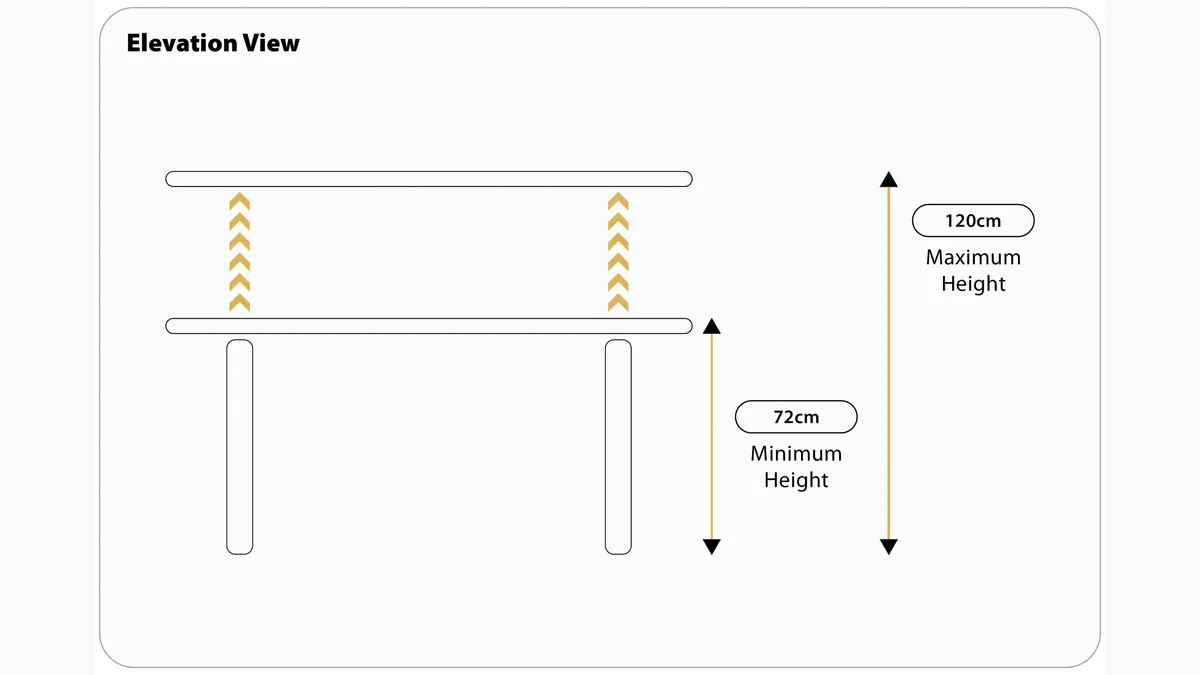
- Height Adjustability & Ergonomics: Look for an adjustable standing desk that can be set to your ideal heights for both sitting and standing. You should be able to position the desktop so that your elbows are at 90° and your computer screen is at eye level. This ensures a neutral posture (no hunching or craning your neck). Electric standing desks with programmable memory settings (like the Vival desk line) are especially convenient – with one touch, you can switch between sitting and standing positions calibrated to your body. This ease of adjustment encourages you to use the desk properly and often, reinforcing your good posture habits. In short, the right desk will fit you and help you effortlessly sustain those posture gains.
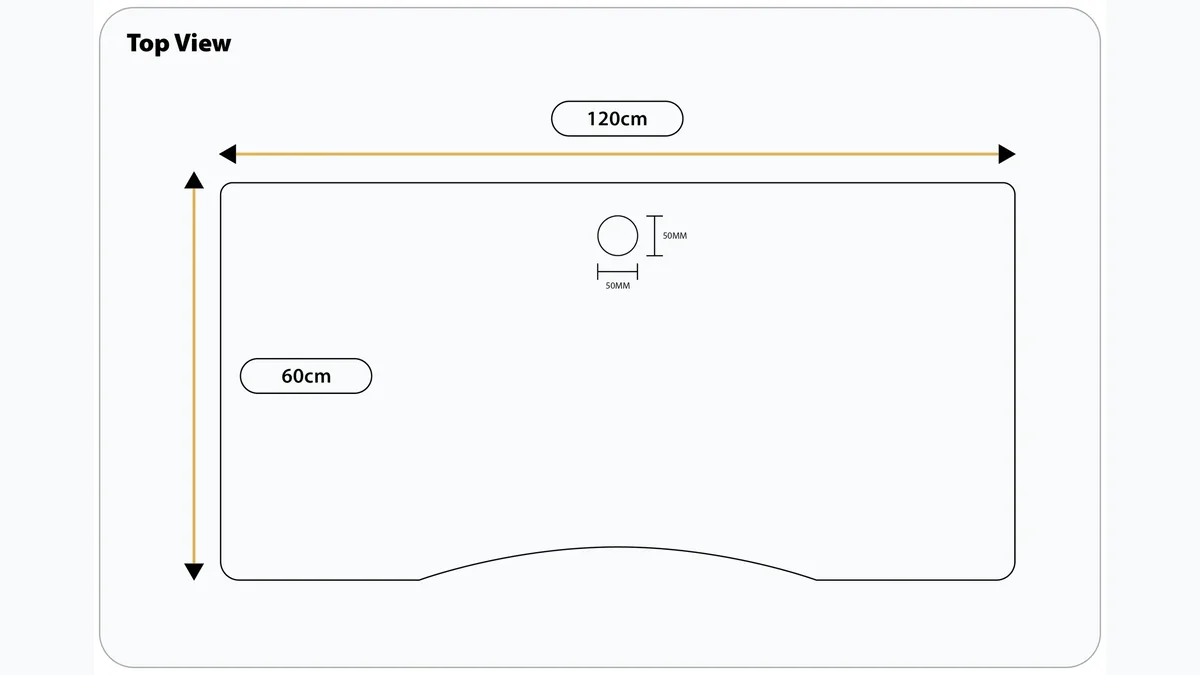
- Stability & Space: Pay attention to build quality and desk design. A stable desk that doesn’t wobble at height will let you lean in and work confidently without worrying about your monitor shaking. A sturdy, well-built frame also lasts longer and feels solid – contributing to peace of mind as you work. Additionally, make sure the desktop size is sufficient for your needs. You’ll want enough space to keep your monitor, keyboard, mouse, and other essentials positioned correctly (so that you aren’t cramped into an awkward posture). Some desks offer extras like cable management or an anti-collision feature for safety; these are nice bonuses that make using the desk more seamless. Finally, consider using an anti-fatigue mat on the floor and wearing supportive shoes when standing. These simple additions reduce strain on your legs and let you stand comfortably for longer, allowing you to enjoy your standing desk posture benefits without discomfort.
What a Standing Desk Will Not Fix — and When to Stop and See a Professional
A standing desk changes the position you work in. It does not change everything, and the honest list is more useful than the sales one. It will not fix a structural problem — scoliosis, a disc injury, an old shoulder injury — and it will not undo years of deconditioning by itself. It is not exercise: standing burns only marginally more than sitting, so it does not replace walking or training. It will not help if you set it wrong — a desk at the wrong height simply moves strain from your lower back up to your neck and wrists. And on the evidence above, it will not make you work faster: in that 2024 trial, typing speed and error rates were identical whether people sat or stood.
Stop and see a doctor or physiotherapist if pain, numbness or pins-and-needles is still there after about two weeks of correct setup and regular position changes; if it wakes you at night; if it runs down one arm or one leg; or if your grip feels weak. Those are signs of something a desk cannot treat, and the longer they are managed with furniture alone, the harder they are to settle.
Boosting Confidence and Health at Work
By now, it’s clear that improving your posture can boost both your confidence and your health – and a standing desk is a fantastic tool to help you do it. When you stand with proper posture during your workday, you’re not just burning a few extra calories or relieving back pain (though those are great perks too). You’re actively training your mind and body to operate in a more empowered state. Standing desk posture benefits like reduced pain, better mood, and a stronger presence at work reinforce one another: as your body feels better and more energetic, your self-confidence grows – and as you become more confident and engaged, you’re motivated to keep up the healthy posture habits.
Over time, this positive cycle can truly transform your work experience. You’ll likely find yourself speaking up more, stressing out less, and earning positive notice for the poised way you carry yourself. In summary, paying attention to your posture is a simple change with outsized rewards. By leveraging a standing desk and mindful habits, you can stand taller in the office – and in your career.
Unlock Your Confidence with Better Posture Today
Enjoyed this comprehensive article? Follow our Facebook page, LinkedIn profile or Instagram account for more expert insights and practical tips on cutting-edge technology.
Your journey to greater confidence at work can start with something as basic as adjusting how you stand. By now you’ve seen how closely posture and mindset are connected – and how a few changes like using a standing desk can lead to big improvements. Why not experience these standing desk posture benefits for yourself?
Esmond Service Centre, the exclusive distributor of Vival standing desks in Singapore, is here to help. We specialize in ergonomic solutions that make healthy posture easier to achieve. Our team has seen firsthand how switching to a well-designed standing desk can alleviate pain, improve energy, and elevate our clients’ confidence at work. We’d love for you to enjoy the same results.
Don’t let poor posture hold you back. Unlock your confidence with better posture today – reach out to Esmond Service Centre to learn more or to find the perfect Vival standing desk for your needs. Stand up, stand tall, and let your improved posture propel you to new heights in both health and career! You can read the full spec, price and warranty on our Vival standing desk page, see the terms on our Vival warranty policy, and order online at projectvival.com — or come and try one at our Sin Ming branch first.

Esmond Service Centre's experienced technicians can diagnose and fix it fast — free diagnostics, repairs from $65.