

📑 On this page
What Harvey Norman's extended warranty actually is
Harvey Norman's extended warranty is a retailer plan called Product Care, bought as an add-on at the till. Harvey Norman's own Product Care page sets out the shape of it: terms of 1, 2, 3 or 4 years; cover for "all parts, labour and call out fees for an unlimited amount of repairs"; new-for-old replacement; and cover that is transferable and valid in any country with a Harvey Norman store. It is for consumer use only, not commercial use, and it excludes accessories such as headphones, microphones, cords and cables.
The one detail that trips people up is when it starts. Harvey Norman states that "your cover starts the day after your manufacturer's warranty expires" — so for the first year or two you are relying on the maker's warranty, and Product Care takes over after that. Crucially, the plan extends the period you are covered for failures; it does not widen what counts as a failure. That is the whole game, and it is where almost every declined claim comes from.

What it covers — and the one word that decides everything: "failure"
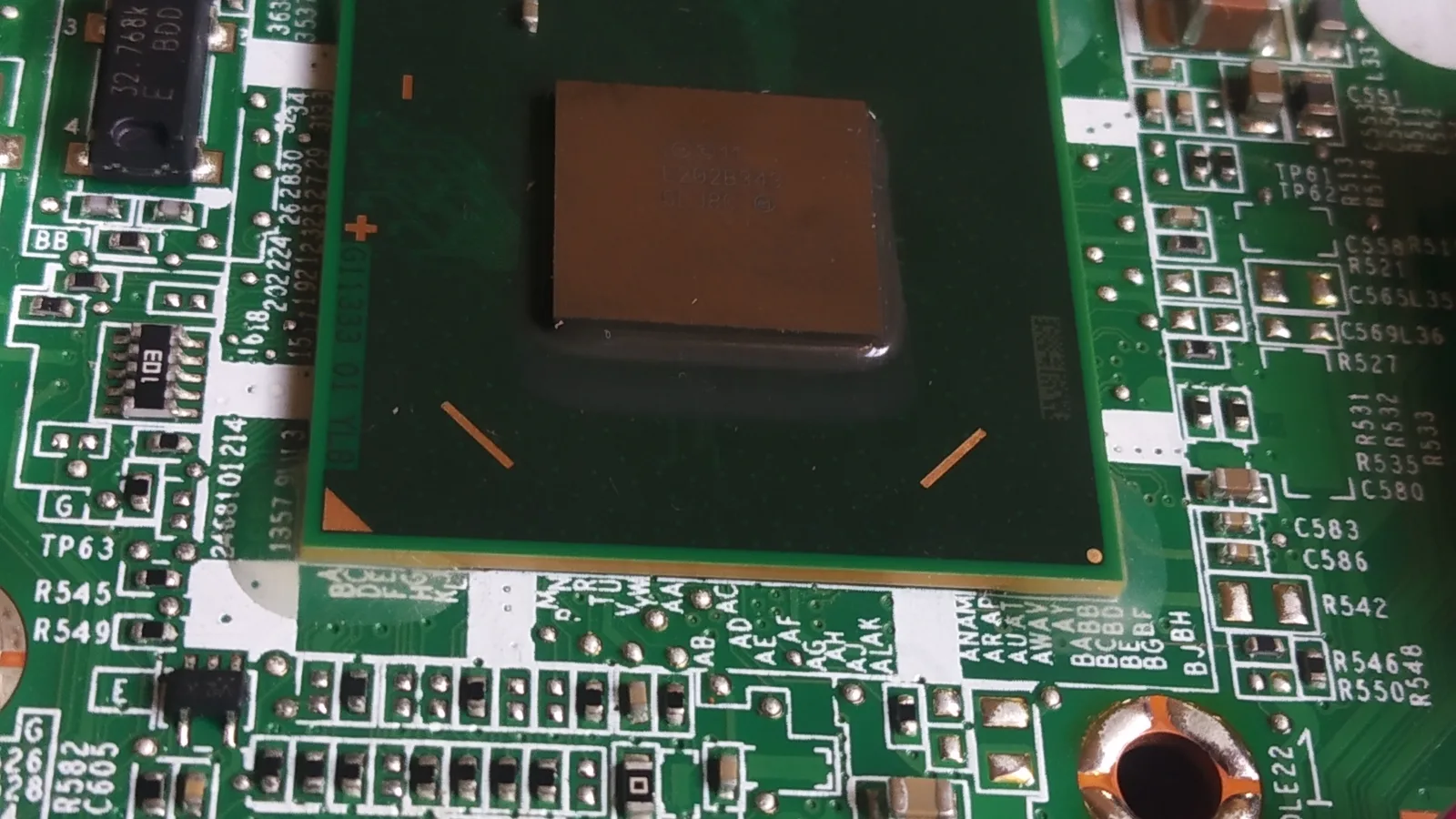
Both a manufacturer's warranty and an extended warranty are built around the same idea: electrical, electronic and mechanical failure. That means a component that stops working on its own during normal use — a charging board that dies, a backlight that fails, a motherboard fault, a port that stops responding, a keyboard that drops keys with no spill or impact behind it. On the bench, that kind of fault is a defect, not damage. One Singapore owner on HardwareZone described having an LCD replaced under this sort of cover "due to burn mark on the 4 corners" — a panel that failed by itself, with nothing done to it.
So the test every assessor applies is simple: did the part fail by itself, or did something happen to it? A failure may be covered. An event — a drop, a spill, pressure on the lid — is not. Hold onto that distinction, because it explains the whole of the next section.
- A motherboard, charging board or port that fails during normal use, with no sign of impact or liquid.
- A screen backlight or panel that dies or develops a defect on its own (as opposed to a crack from a knock).
- A keyboard or trackpad that stops registering with no spill or physical damage behind it.
What your laptop warranty does NOT cover
Here is the part people wish were different. Accidental and physical damage is excluded — by the manufacturer's warranty and by the extended warranty alike. The classic case is a cracked or broken LCD from a drop, a knock, or pressure on the closed lid. A Singapore owner on HardwareZone put it bluntly: the "warranty does not cover battery and physical damage like a broken LCD screen." That answers the question so many people search for — a laptop screen that cracked from impact is simply not covered, by either warranty. Liquid damage is out. A swollen or worn-out battery is treated as wear. And owners repeatedly warn that a "wear and tear" clause gives the assessor an easy reason to decline.
To make the line concrete, here is how the common faults fall across a manufacturer's warranty, Harvey Norman's extended Product Care, and your Lemon Law rights in the first six months.
Where Singapore's Lemon Law fits — and where it stops
A warranty is a contract you buy. Your statutory rights are separate, automatic and free. Under the Consumer Protection (Fair Trading) Act — Singapore's Lemon Law — you can ask the seller to repair, replace, reduce the price of, or refund a product that was defective, provided you claim within six months of purchase. The remedies run in that order: repair or replacement first, and only then a price reduction or refund if those are unreasonable.
But the Lemon Law only covers goods that did not conform, or were not of satisfactory quality, at the time of sale. It expressly does not help where the consumer damaged the item, misused it, or tried to repair it themselves — which puts drops, spills and cracked screens firmly outside it. If a seller wrongly refuses a genuine claim, the Consumers Association of Singapore (CASE) can step in. So think of it this way: the Lemon Law protects you against a laptop that was faulty from new, not against an accident that happened months later.
The question we hear most at the bench
The single most common extended-warranty message we get on WhatsApp is some version of the same thing: "my laptop screen cracked — is it covered?" Almost always the honest answer is no, because the crack came from a drop, a knock, or pressure on the closed lid — accidental damage every warranty excludes. We see the same short list over and over: shattered and spider-cracked LCDs, panels with dark ink-blot bruises where pressure has crushed the liquid crystal, swollen batteries lifting the trackpad, and liquid that has crept under the keyboard. Each of those is a repair the owner pays for, warranty or not.
It helps to know what is actually broken. A laptop screen is a layered assembly — the glass and LCD panel with its backlight behind it, driven by a thin video (flex) cable into the board. A visible crack, a bright bleeding patch or a black blotch means the panel itself is damaged, and a damaged panel is replaced, not mended: there is no way to "repair" cracked liquid-crystal glass. We match the exact panel — standard Full HD, Retina or OLED — to your model, because a mismatched panel is the usual reason a cheap replacement looks dim or scrolls poorly afterwards.
A swollen battery is the other one we urge people not to ignore. A battery that has puffed up enough to lift the trackpad or bow the base is a safety matter, not a cosmetic one — the cell is stressed and should be taken out of service and replaced, not left charging on a desk. None of this is a failure the warranty will pay for, because the battery is a consumable wear part; but all of it is a straightforward repair.

When the warranty won't pay — how we fix it
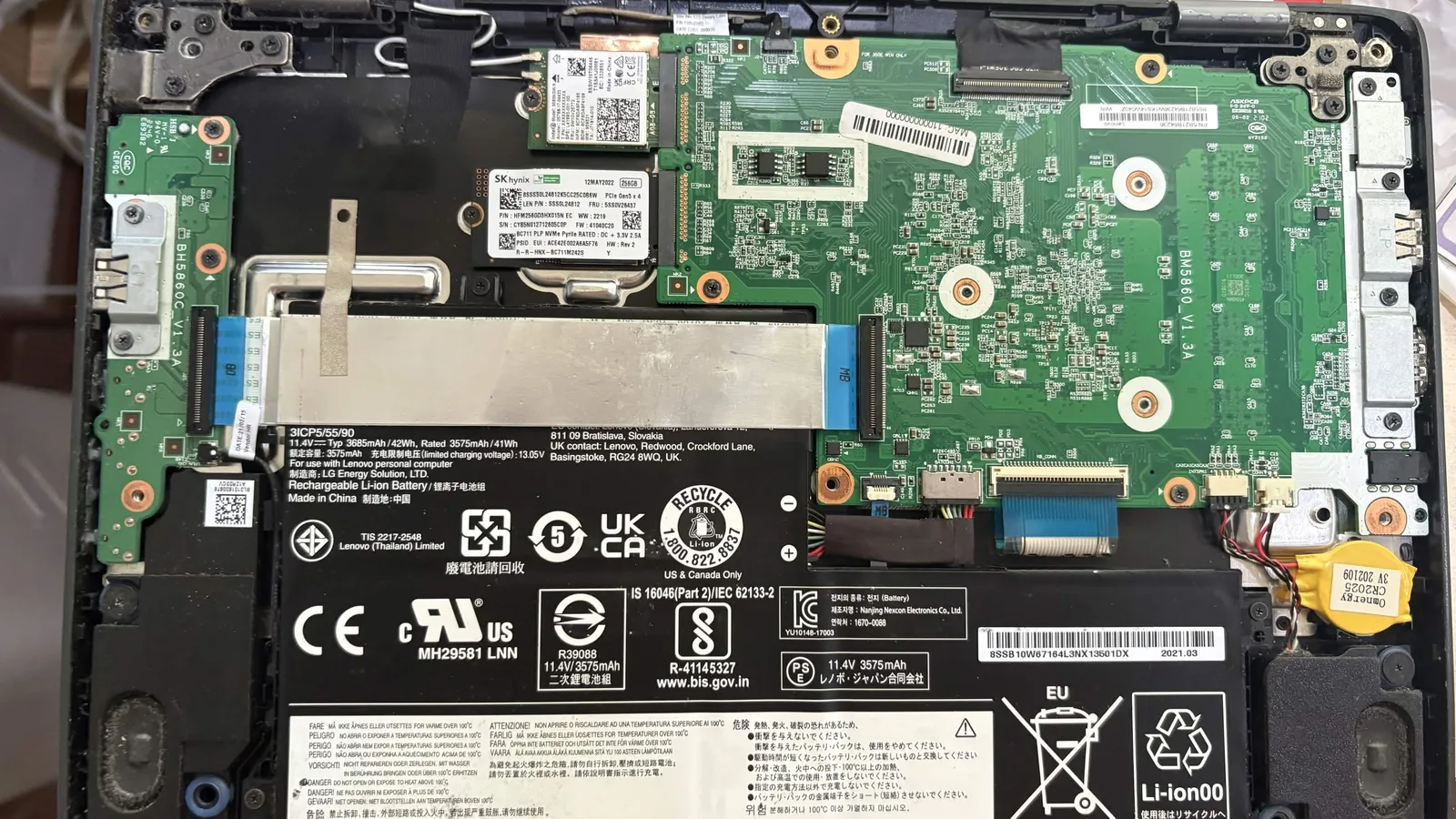
Esmond Service Centre repairs exactly the faults a warranty leaves to you — cracked screens, swollen batteries, liquid damage, worn keyboards — for MacBook, Dell, HP, Lenovo, Asus, Acer, MSI and Razer, at our Alexandra and Sin Ming branches. The diagnosis is free, you get the exact price before we start, and if we can't repair it you pay nothing. Every repair carries a 90-day warranty on the work and the parts we fitted, extendable with the optional Esmond Care plan. We say the two honest exceptions up front, before you pay, not after: a water-damaged board carries no post-repair warranty — a board that has been wet can fail again for reasons no repairer controls — and a software reinstall carries none either.
A cracked laptop screen is the most common out-of-warranty job, and replacement at Esmond Service Centre starts from S$186 — the exact figure depends on the panel (a standard Full HD, a Retina or an OLED) and your model, and a battery depends on the model too, so the honest number only comes after we have seen it. The diagnosis is free; WhatsApp us your laptop model for a quote, or bring it in and we'll take a look.

Esmond Service Centre's experienced technicians can diagnose and fix it fast — free diagnostics, repairs from $65.