
📑 On this page
Is your laptop not lasting as long as it used to, or shutting down unexpectedly? These are telltale signs that your battery could be nearing the end of its life. As a certified laptop repair specialist at Esmond Service Centre with over 16 years of experience, I’ve helped thousands of customers troubleshoot and replace their laptop batteries. Battery replacement is one of our specialties at Esmond Service Centre, and in this guide I draw on our expertise to help you identify key warning signs of a failing laptop battery and resolve each issue step by step. By the end, you’ll know when it’s time for a laptop battery replacement in Singapore and how to keep your device powered safely.
Why Is My Laptop Battery Draining Fast All of a Sudden?
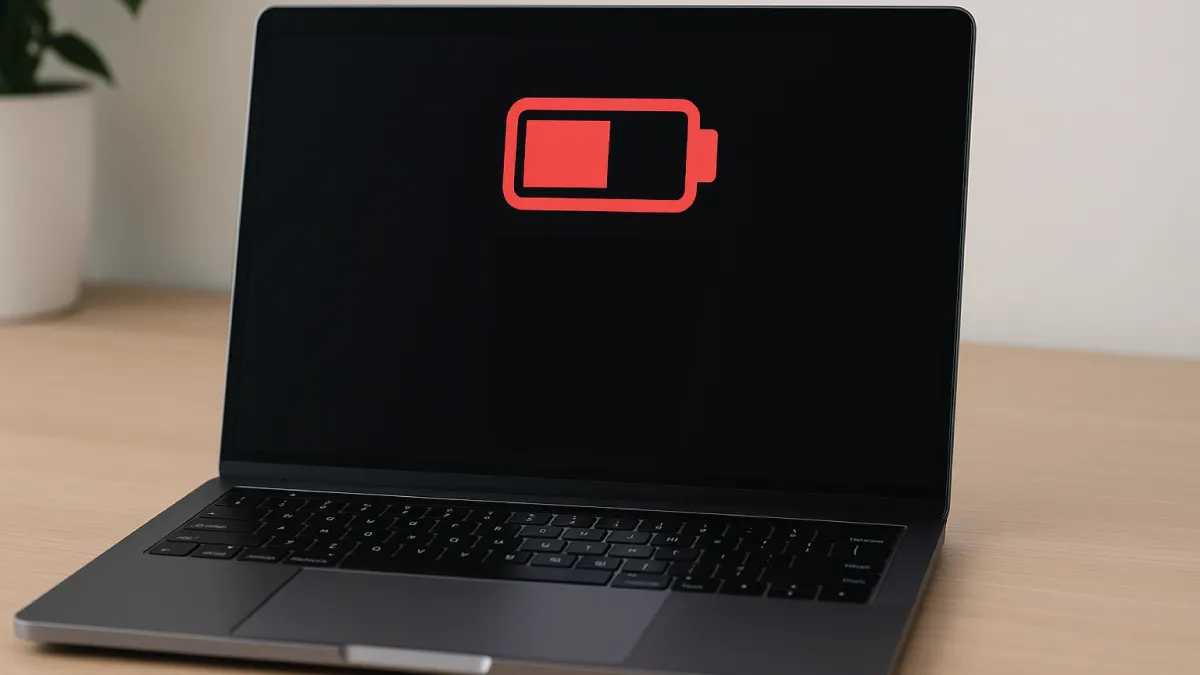
One clear red flag is your laptop battery draining much faster than before. If the laptop used to last 5–6 hours but now dies after just 1–2 hours, the battery’s capacity has likely degraded significantly. Modern notebooks should hold a charge for several hours on normal tasks; a radical drop in runtime means the battery cells can no longer hold sufficient energy.
How to Fix It:
- Check Battery Health: Use your laptop’s built-in diagnostics to see the battery’s health status. On Windows, generate a Battery Report or check the BIOS for a health reading; on a MacBook, look up the cycle count and battery condition (e.g. Normal vs. Service). If the report shows poor health or a very high cycle count, that confirms the battery is worn out.
- Close Background Apps & Test: Save power by closing unnecessary programs, turning down screen brightness, and enabling battery saver mode. Then observe if the battery still drains rapidly under light use. If it does, the battery hardware is failing (not just a software issue causing drain).
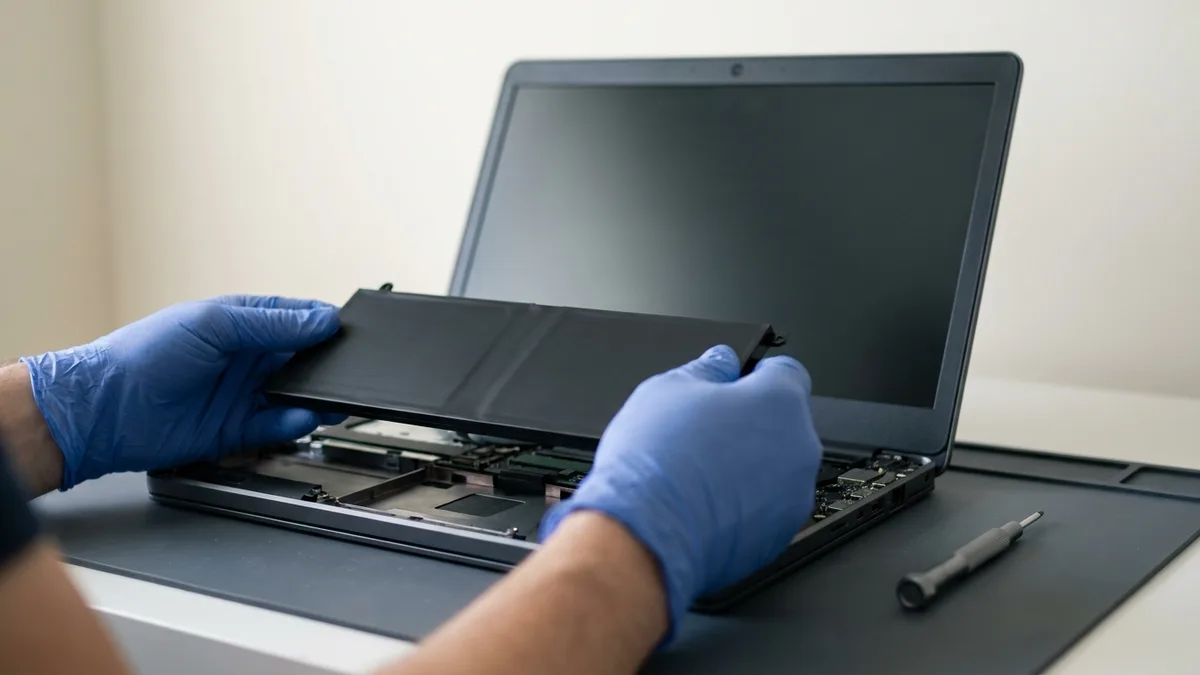
- Replace the Battery: Installing a new battery will restore your laptop’s original runtime. In fact, a laptop battery replacement in Singapore can completely solve this rapid drain issue. A fresh battery works because you’re swapping out the old, worn cells for new ones with full capacity – eliminating the wear that caused the quick drain in the first place.
Unexpected Shutdowns (Laptop Dies Without Warning)
Another warning sign is the laptop shutting off suddenly even when the battery indicator shows 20–30% charge remaining. If your laptop powers off with no low-battery warning, it likely means the battery can’t hold voltage at low charge – a common symptom of a failing battery. Often, an aging battery’s voltage will drop sharply, fooling the system into thinking charge was left when there actually wasn’t. The result: the laptop dies out of the blue, which can lead to data loss or file corruption.
How to Fix It:
Before you try any of this, check that the battery is not swollen. If the bottom casing bulges, the trackpad sits proud of the palm rest, or the keyboard has lifted, stop here and go straight to the swollen-battery section below. A swollen pack must not be run flat and must not be charged, so the steps in that section replace the ones here. Everything below assumes a battery that is simply worn out, not one that is damaged.
- Observe When It Shuts Down: Note if the laptop consistently turns off around a certain percentage (say always near 25% remaining). This pattern suggests the battery gauge is misreporting and the battery truly has no capacity left below that point. It’s a clear sign of a weak battery that can’t sustain power once it hits that level.
- Reset the Battery Gauge — carefully. On an Intel-based Mac, resetting the SMC might help; a Mac with Apple silicon resets its SMC automatically, so no action is needed. ⛔ Do not use the old advice of running the battery flat to 0% and recharging it — that is a full discharge followed by a full charge on a pack you already suspect is failing, and it is exactly what this page's own swollen-battery section tells you not to do. If you decide to update the BIOS on a Windows laptop instead, know what it costs first: Microsoft lists "upgrading critical early startup components, such as a BIOS or UEFI firmware upgrade" among the events that put a PC into BitLocker recovery, and you will then be asked for a recovery key before the drive can be read. Find and save that key first, from a different device, using Microsoft's instructions for finding a BitLocker recovery key.
- Replace the Battery Promptly: The sure fix is to replace the battery. A new battery will provide stable power until it’s truly empty, so your laptop won’t crash without warning. Getting a battery replacement will permanently resolve the random shutdown problem. This solution works by removing the old, unstable cells and giving your laptop fresh cells that hold voltage reliably – stopping those surprise shutdowns.
“Plugged In, Not Charging” (Battery Won’t Charge Fully)
If your laptop refuses to charge to 100% or shows “Plugged in, not charging,” it’s a sign of battery trouble. You might notice the charge level gets stuck at a certain percentage (like 60%) and never goes higher, or the laptop might only run when the charger is connected and shut off immediately if you unplug it.
How to Fix It:
- Check the Charger and Port: First, make sure it’s not a power adapter or socket issue. Confirm your charger is working properly – try using a different compatible charger or plug the current one into another outlet. Also inspect the laptop’s charging port for dust or a loose connection. Ruling out a bad charger or port ensures the problem is truly with the battery.
- Replace the Battery: If the hardware connections are fine but the battery still won’t charge past a certain point (or the laptop dies when unplugged), the battery is likely at the end of its life. The most effective solution is a battery replacement. A new battery will charge to 100% normally and hold that charge. It works because you’re replacing the old battery (which can no longer accept full charge) with a fresh one. Our technicians see this issue often and provide fast battery replacement solutions to get you back up and running.

Overheating or Swollen Battery (Dangerous Signs)
A swollen or overheating battery is a serious warning sign you shouldn’t ignore. If your laptop’s bottom casing is bulging, the keyboard is lifting, or it gets extremely hot during use/charging, the battery may be failing catastrophically. A swollen battery can warp your laptop’s frame and even pose a fire hazard.
How to Fix It:
- Power Off Immediately: If you suspect the battery is swollen or dangerously hot, shut down the laptop and unplug it. Do not continue using it. Using it further is dangerous since the battery could ignite.
- Do Not Tamper with the Battery: Never try to poke or pry a swollen battery, and do not attempt to charge it. The battery is unstable at this point and could rupture if mishandled. It needs to be removed and replaced – not fixed by the user.
- Get a Professional Replacement ASAP: The only safe solution is to have the swollen battery removed and replaced by professionals. Contact a repair center as soon as possible to handle this. (At Esmond Service Centre, we offer immediate battery replacement for swollen batteries – we’ll safely swap out the old battery and install a new one to eliminate the danger.)
Battery Warning Messages in the System
Finally, pay attention to battery warnings or error messages on your laptop. Windows may show a "Consider replacing your battery" alert, or your Mac might display "Service Battery" in the menu bar. These alerts are the computer telling you the battery health is critically low or that it is not working properly.
How to Fix It:
- Heed the Warnings: If your system explicitly warns about the battery, take it seriously — those messages mean the pack is on its last legs. You can double-check with the health reading from the first section, but the alert is usually accurate.
- Replace the Battery to Stop the Alerts: Once a new pack is fitted the warnings stop, because the system sees a healthy battery again. More to the point, the laptop gets reliable power instead of slowdowns and sudden shutdowns.
Stay Powered Up: Key Takeaways for Laptop Battery Care
Your laptop’s battery will usually tell you when it’s dying – you just have to recognize the signals. We covered five major signs: short battery life, unexpected shutdowns, charging problems, physical swelling, and system warnings. By catching these issues early and following the troubleshooting steps, you can often prevent sudden laptop failures. Also, remember that practicing good battery habits helps delay problems – keep your laptop cool, avoid keeping it plugged in 24/7, and use the recommended charger. Staying proactive will keep your laptop running smoothly and avoid downtime.
What a new battery will and will not fix. Replacing it fixes short runtime, sudden shutdowns at 20–30%, a pack that will not charge past a set percentage, and the system's own "replace your battery" warnings. It will not fix a faulty charger or a damaged charging port, a charging circuit that has failed on the mainboard, or software that is flattening the battery — background apps, maximum brightness and a laptop running hot will drain a brand-new pack just as fast. That is why the checks above come before the replacement rather than after it.
Get Professional Laptop Battery Service in Singapore Today
Enjoyed this comprehensive guide on laptop battery issues? Follow our Facebook page, LinkedIn profile or Instagram account for more expert insights and practical tips on cutting-edge technology and battery replacement advice. If you’re in need of a battery replacement service or have any concerns about your device’s battery performance, reach out to Esmond Service Centre – your trusted battery replacement provider – for a professional consultation. Our certified technicians are ready to help you stay powered up. Don’t let a failing battery slow you down – contact us today and let us get your laptop running like new!

Esmond Service Centre's experienced technicians can diagnose and fix it fast — free diagnostics, repairs from $65.