

📑 On this page
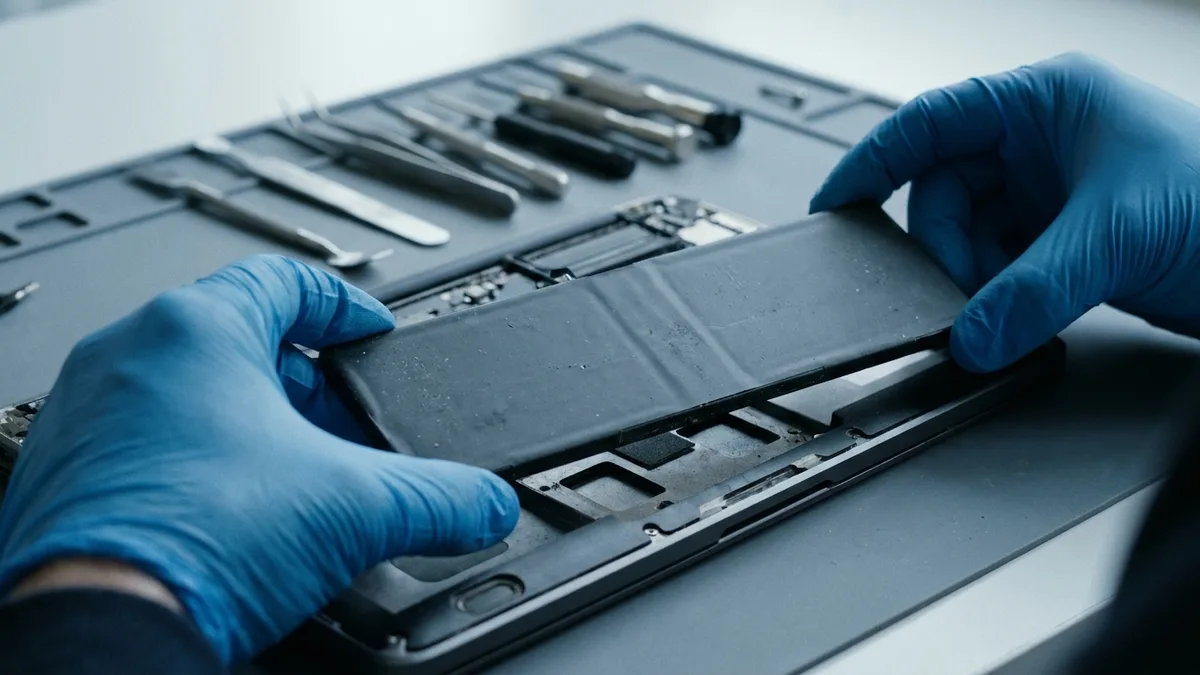
Every MacBook user eventually faces the reality of a declining battery. Knowing when to replace your MacBook’s battery can save you from unexpected shutdowns and sluggish performance. Apple designs MacBook batteries to retain about 80% of their original capacity after around 700 - 1000 full charge cycles. Esmond Service Centre’s certified technicians have encountered every MacBook battery issue imaginable. In this MacBook battery replacement guide, we leverage our professional experience to help you identify warning signs of battery failure, understand how MacBook battery life works, and learn practical tips to extend your battery’s lifespan. By the end, you’ll know how to keep your MacBook powered and when to seek a MacBook battery replacement from a professional.

Recognizing When You Need a MacBook Battery Replacement
macOS provides helpful battery health notifications, but you should also watch for hardware symptoms. Here are some common signs that indicate you may need a MacBook battery replacement:
Before the list below, one check that changes the answer: is the battery swollen? A swollen MacBook battery is not a "replace it soon" battery — it is a stop-using-it-today battery, and the tells are physical rather than on screen: the trackpad has become stiff or hard to click, the lid no longer sits flush when closed, or the machine rocks on a flat desk because the bottom case is bowing. If any of those describe your Mac, unplug the charger, stop using it, and do not press on the bulge or try to lever the case open — the pack is glued in, and a damaged lithium cell is the one failure on this page that is a safety problem rather than an inconvenience. Bring it in as it is, and say on the phone that you think it is swollen. Everything below is about a battery that is simply worn out.
| Battery Status / Symptom | What It Means |
|---|---|
| Swollen or bulging battery — a stiff or hard-to-click trackpad, a lid that no longer sits flush, or a case that rocks on a flat desk. | Stop using it today. Unplug the charger, and do not press on the bulge or open the case. This is the one sign on this list that is a safety issue rather than a convenience one, and it is the reason to bring the machine in now instead of planning a replacement for later. |
| “Replace Soon” / “Service Recommended” – Battery health status in macOS. | The battery’s capacity is reduced. You can continue using it for now, but the battery health is declining and a replacement is recommended soon |
| “Replace Now” / “Service Battery” – Battery health status warning. | Your battery's capacity is well down and macOS is asking you to have it serviced. It does not mean the Mac is unsafe or about to die — Apple's own wording is that "you can use your battery after it has reached its maximum cycle count, but you might notice a reduction in your battery life". So plan the replacement rather than rushing it. The one version of this that needs acting on today is the swollen battery in the row above. |
| Rapid Drain or Unexpected Shutdowns – MacBook dies quickly or shuts off at ~20–30% charge. | The battery can’t hold charge properly or give an accurate reading. If your MacBook dies abruptly (say at 30% charge), it’s a clear sign the battery is failing |
If you observe any of these warning signs, don’t ignore them. A deteriorating battery can worsen over time and even lead to sudden power loss or performance throttling. Solution – Check Your MacBook’s Battery Health: Apple makes it easy to verify your battery condition:
- On macOS Ventura or later: Go to Apple Menu > System Settings > Battery > Battery Health. This will display if the condition is Normal or shows a service warning (e.g. Service Recommended).
- On older macOS versions: Hold the Option key and click the battery icon in the menu bar to reveal the battery’s condition status (such as Replace Soon, Replace Now, or Service Battery).
By regularly checking these indicators, you can catch a bad battery early. If the status is “Service Battery” or your cycle count is near the recommended limit, it’s time to plan for a MacBook battery replacement.
How Many Charge Cycles Does a MacBook Battery Last Before You Need to Replace It?
There is no single cycle number for every MacBook. Apple's own page says "cycle count limits vary between Mac models" and publishes a table you can look your model up in, so the honest answer to "how many cycles?" is "look yours up". A charge cycle means using 100% of the battery's capacity, not necessarily in one sitting — 50% today plus 50% tomorrow counts as one. And the 80% figure is widely misquoted, including on pages like this one. Apple does not say a battery fails at 80%; it says your battery "is designed to retain up to 80% of its original charge capacity at its maximum cycle count", and that "for best performance, replace your battery when you reach its maximum cycle count". Treat 80% as the design target at the end of the rated life, not as a fault line.
How to Check and Manage Cycle Count:
- Find your battery’s cycle count: Hold the Option key and click the Apple menu , then open System Information > Power. Under Battery Information, you’ll see the Cycle Count and Condition (see figure below).
- Plan for a replacement if needed: if your cycle count is at or near your model's published limit, or the Condition line reads "Service Recommended", it is time to consider a MacBook battery replacement. You do not have to do it the same day — Apple is explicit that the Mac keeps working past the cycle limit — but a battery that is shutting the machine down early is already costing you work. The exception, again, is a swollen battery: that one is not a scheduling decision.
Understanding your cycle count lets you decide when a new battery is warranted. For best performance, Apple advises replacing the battery once it reaches its maximum cycle count. In practice, if you find your cycle count is very high or the battery life has become a fraction of what it used to be, a fresh battery will dramatically improve your MacBook’s uptime.
Tips to Extend Your MacBook’s Battery Life and Delay a MacBook Battery Replacement
While no battery lasts forever, proper care can extend its lifespan and delay the need for replacement. Here are several practical tips to get the most out of each charge and preserve your battery’s health longer:
- Let macOS manage the charging instead of watching the clock: sitting at 100% for long stretches does age a lithium battery, and that is exactly why macOS has Optimised Battery Charging — Apple describes it as learning your routine and waiting "to charge past 80% battery until you need to use it". With that switched on you do not need to unplug at bedtime, because the Mac is already holding the battery below full for you. Leave the setting on and leave the clock alone; if you work on mains power for days at a time, that is the feature doing its job rather than something to correct by hand.
- Avoid Extreme Temperatures: Heat is the enemy of lithium batteries. Don’t leave your MacBook in hot cars or under direct sunlight, and keep vents clear to prevent overheating. High temperatures can permanently diminish battery capacity, leading to a need for MacBook battery replacement sooner than expected. Try to use and store your MacBook in moderate temperatures (around 10–35 °C) for optimal battery health.
- Practice Moderate Charging Habits: Try not to let your battery drain to 0% regularly or sit at 100% for too long. It’s ideal to use the battery in the mid-range – for example, start charging when it drops to around 40%, and unplug at about 80–90%. This gentle cycling puts less strain on the battery cells. If you primarily use your MacBook on AC power, be sure to occasionally run it on battery to keep the battery chemistry active and help delay the need for a MacBook battery replacement.
By following these tips, you’ll maximize both the battery life per charge and the overall lifespan of your MacBook’s battery. Small habits – like unplugging once charged, avoiding excessive heat, and not pushing the battery to extremes – add up to significantly less degradation over time, ultimately saving you from an early MacBook battery replacement. Not only will you get more hours of use each day, but you’ll also extend the battery’s usable years before needing a replacement.
Key Takeaways: Keep Your MacBook Power Healthy and Reliable
In this guide, we’ve explored how to identify when your MacBook battery is due for a MacBook battery replacement and how to extend its life. Recognizing the warning signs – like system alerts (Service Battery warnings or rapid battery drain – is crucial to prevent sudden downtime. We also learned that Apple batteries are built to last around 1000 cycles, but real-world factors can shorten or prolong that time. By actively checking your battery health and cycles, you won’t be caught off guard.
Equally important are the preventive tips: simple habits such as avoiding overnight charging, keeping your MacBook cool, and using Optimized Charging can significantly slow down battery aging, delaying your next MacBook battery replacement. A well-cared-for battery means you enjoy longer use per charge and delay the need for a replacement. (Finally, when your battery is clearly reaching the end, don’t put off replacing it. A fresh battery will breathe new life into your MacBook, restoring its on-the-go reliability. It’s best to choose professional battery service to ensure the replacement is done safely and correctly.) By staying informed and proactive, you’ll keep your MacBook running smoothly with minimal interruptions – postponing the need for a MacBook battery replacement as long as possible.
What a new battery will and will not fix. A replacement restores your runtime and stops the early shutdowns, and on a Mac that had begun throttling because the battery could no longer deliver peak power, it brings the speed back too. It will not fix a Mac that was already slow for some other reason — a full disk, a heavy list of login items or a failing drive are not battery problems, and a new cell does not repair a damaged charging port or a fault on the board either. If a swollen pack has already distorted the case or the trackpad, that damage is separate and is quoted separately. When to stop guessing and let a technician look: if the Mac still shuts down early after a new battery, the battery was never the fault — that is the point to bring it in rather than keep swapping parts.
Stay Powered Up with Esmond Service Centre
Enjoyed this comprehensive MacBook battery replacement guide? Follow our Facebook page, LinkedIn profile or Instagram account for more expert insights and practical tips on cutting-edge technology.
If your MacBook is showing battery troubles, don’t wait – reach out to Esmond Service Centre for a professional consultation. Our certified technicians are ready to help with a free diagnostic check and expert MacBook battery replacement (with prices from $128 SGD, before GST). Let us take care of your MacBook, so you can stay productive without missing a beat. Contact Esmond Service Centre today for a swift MacBook battery replacement and give your MacBook the power boost it deserves!

Esmond Service Centre's experienced technicians can diagnose and fix it fast — free diagnostics, repairs from $65.