
Last updated:
USB drive asking to be formatted, showing 0 bytes, or not detected? Esmond Service Centre recovers files from damaged and corrupted flash drives across Singapore — free evaluation, no-data-no-fee.

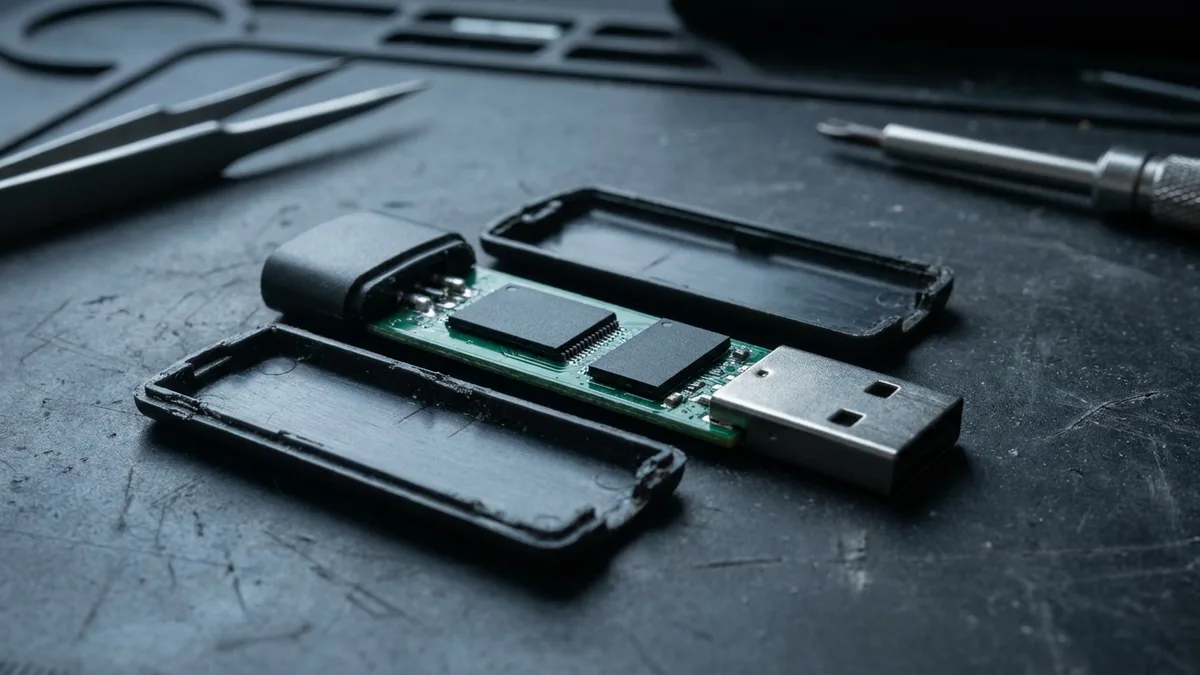
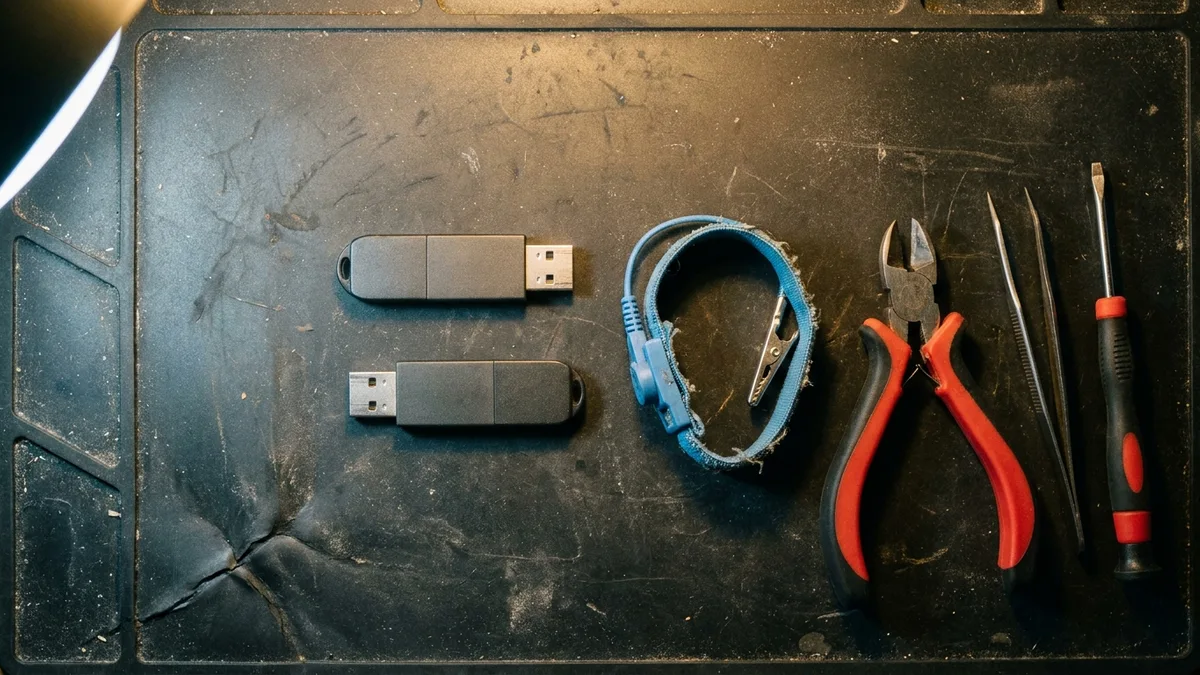
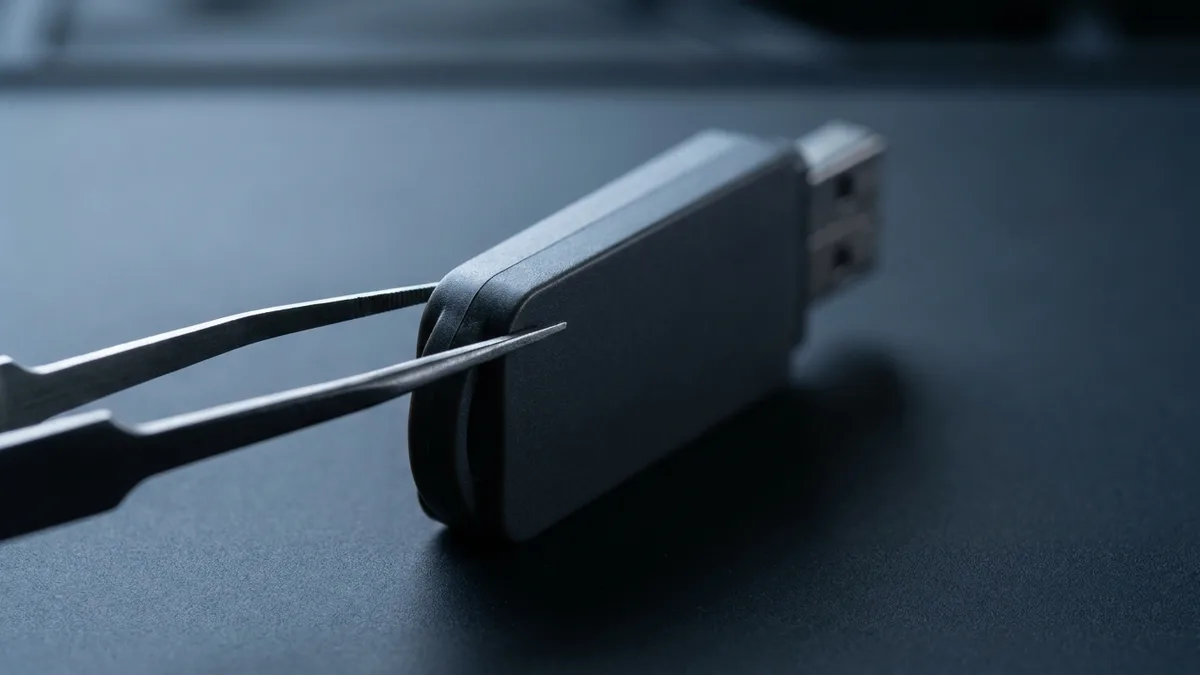
A USB stick is a bare circuit board with three parts that matter: NAND flash memory that holds your files, a controller chip that indexes them, and a metal plug soldered to one end. Almost every failure starts at one of those three — the plug works loose or snaps off, usually while the drive is still in the port; the controller stops answering, so the drive shows 0 bytes or nothing at all; or the file system is corrupted because the stick was pulled out mid-write. In all three the memory chips normally still hold everything. Newer sticks make the job harder rather than hopeless: on a monolithic drive the memory and the controller are moulded into a single sealed chip with no separate parts to work on — the same situation as a soldered onboard SSD — which is exactly why the evaluation is free and comes before any price.
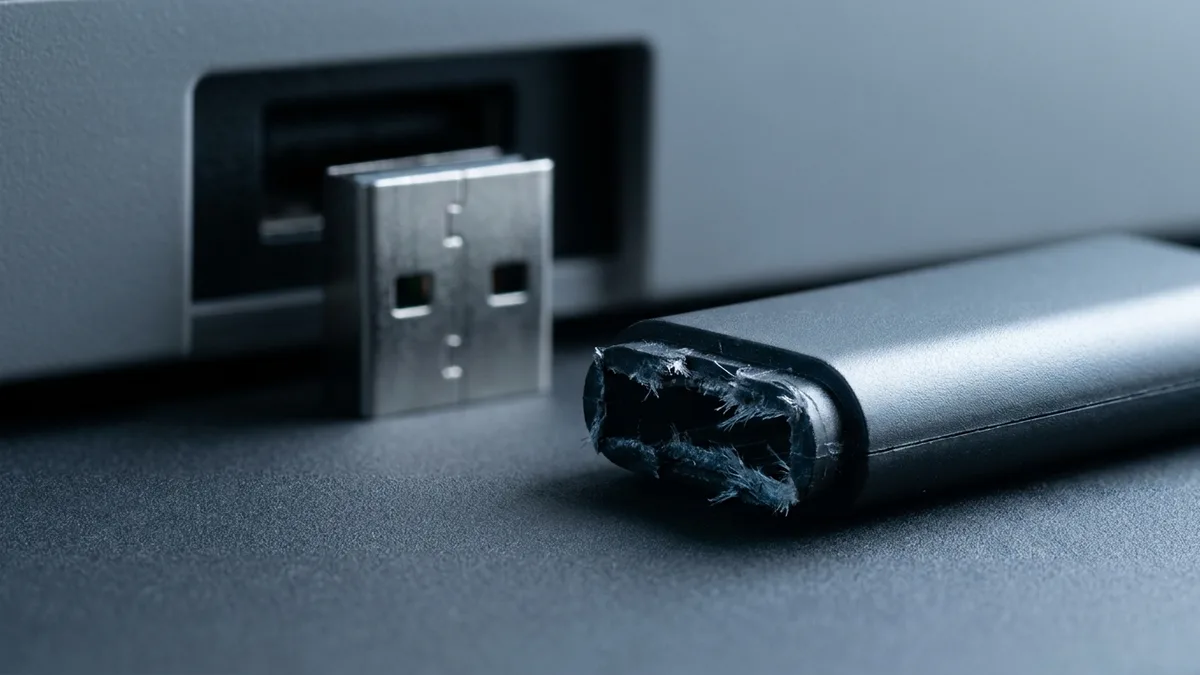
If any of that has just happened, stop using the drive now — that one step decides how much comes back. Do not keep pulling it out and pushing it back in: a controller that is already failing can go for good on the next attempt. Do not let Windows format it, do not run CHKDSK, and do not run the manufacturer's own repair utility — each of those writes to the very tables your files are indexed from. A flash drive left unplugged in a drawer loses nothing, so leave it alone and let us look at it first. And once your files are back, put them somewhere that is not another USB stick — our data backup guide covers what a second copy should live on.
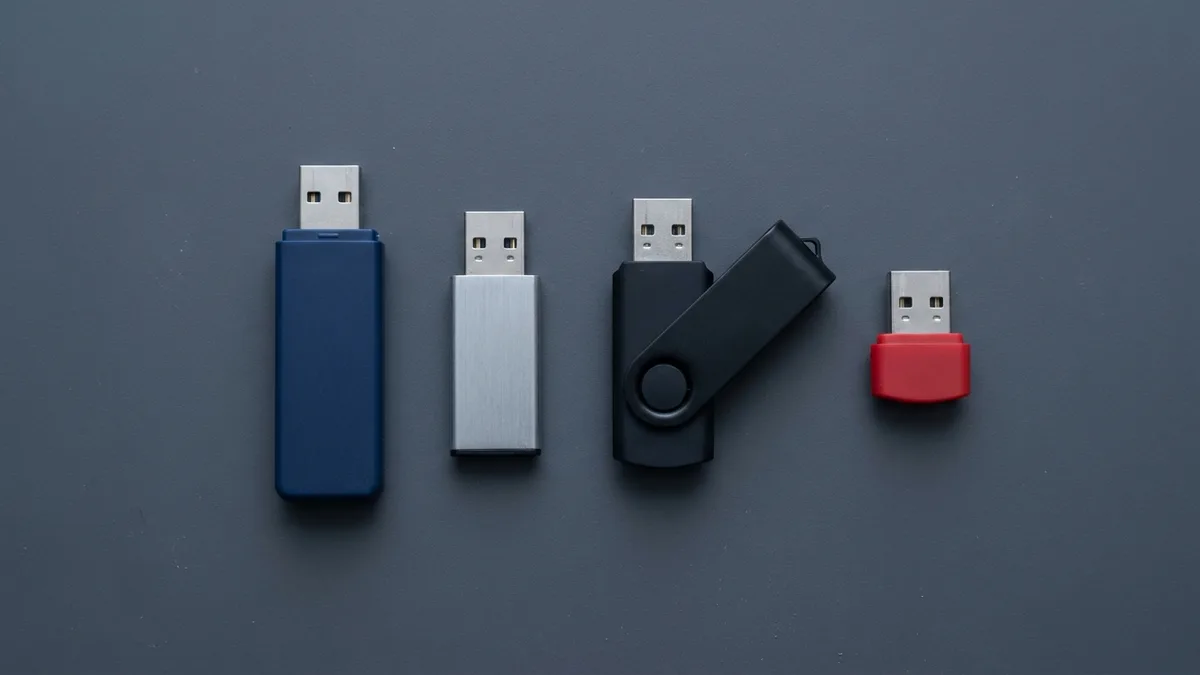
We recover USB flash and thumb drives from every major brand sold in Singapore — SanDisk Cruzer, Ultra and Extreme sticks, Kingston DataTraveler, Samsung BAR Plus, PNY Attaché, the USB-C sticks that plug straight into a phone, and the unbranded promotional drives handed out at events. Documents, photos, dissertations and business records, for personal, academic and business use.
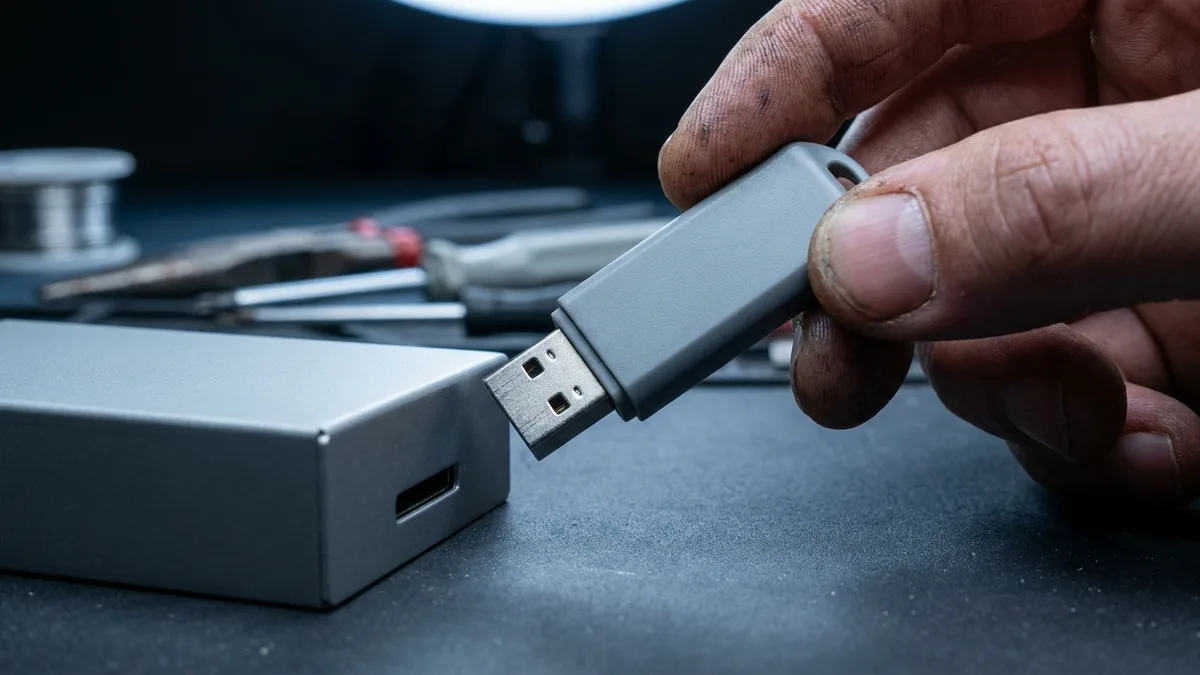
Every drive goes through the same four steps, and you know the price before we touch the data:
What you pay comes down to one question: can a computer still see the drive? If it can, the fault is logical — deleted or formatted files, a format prompt, a RAW volume — and that is software-level work. If no port on any machine detects it, or the plug has come away from the body, that is a hardware-level job. Every drive starts with a free evaluation and a fixed quote, and on a no-data-no-fee basis you approve the price before recovery begins. These are the rates Esmond Service Centre already publishes on our main data recovery Singapore page, or contact us for a free assessment.
| What we recover | Starts at (SGD, excl. GST) | Typical turnaround |
|---|---|---|
| Software-level recovery — deleted or formatted files, a format prompt, 0 bytes or a RAW volume, drive still detected | Fr $95 | From 1–3 working days |
| Hardware-level recovery — drive not detected in any USB port, snapped connector or controller fault | $580 and above | From 10–14 working days |
Send us the symptom and we'll come back with what it likely is, what it will cost, and how long it will take. The diagnosis is free, and if we can't fix it, you pay nothing.
Bring it to Esmond Service Centre at Sin Ming or Alexandra — free diagnostics, repairs from $65, many done in 1–2 hours.